Author: Dira Tjokro | Editor: Intan Khatulistiwa
CVs are Dangerous!
Or if we care to ellaborate; Fake Résumés are dangerous.
They promise to tell the story of a candidate, but more often, they hide the real one, or in the age of AI, they even tell fairy tales more often than the truth by delivering another fake résumés.
AI has made it easier than ever to create a fake résumé, yet the same technology can also help recruiters identify them, if used right.
The Biases That CVs Can’t Shake Off (Until Now)
CVs; the curricula vitae or résumés, were designed in a world with far fewer ways to signal competence. They leaned heavily on historical details, school names, job titles, formatting, and “fancy” language. But fast forward to 2025, and that model is collapsing under the weight of automation, hiring bias, and inflated claims.
Evidence of Bias & Flaws:
Gender & Race Bias in AI Résumé Screening
A recent study by Brookings showed that automated résumé screening tools can exhibit gender, race, and intersectional bias, disadvantaging racial or ethnic candidates in particular. These system often encode subtle cues, names, linguistic style differences, that correlate with demographic traits, reinforcing hiring bias even when recruiters intend fairness.
Persistent Implicit Bias from Conventional CVs
The classic “name bias” experiment by Bertrand & Mullainathan found that White-sounding names got ~50% more callbacks than otherwise-identical résumés with African-American-sounding names. That result isn’t new, but very relevant: CVs are not neutral. They carry historical bias embedded in how we evaluate education, networking, and prestige.
Why AI Makes It Worse, Not Better
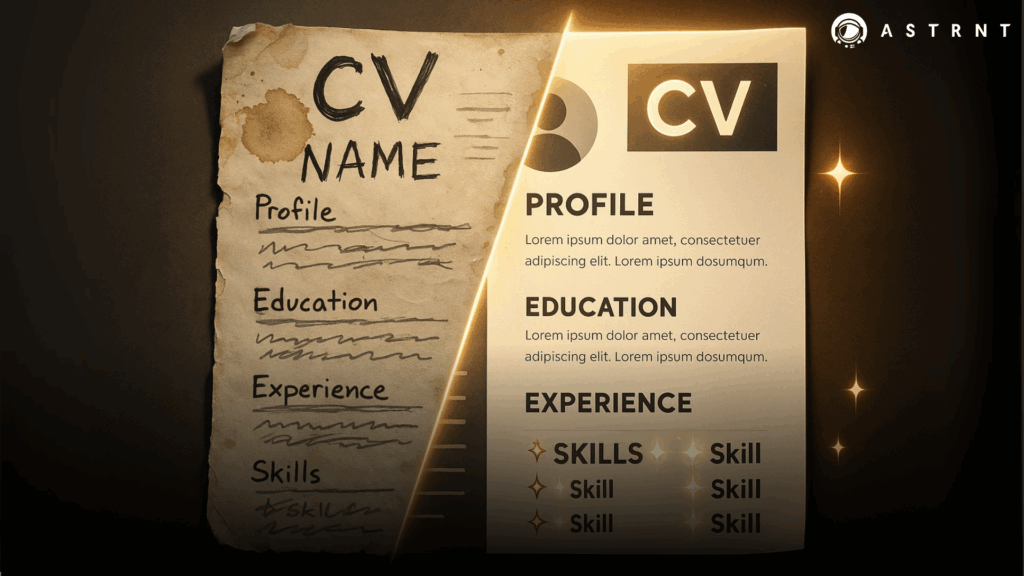
Generative AI has supercharged résumé polishing. In minutes, job seekers can produce AI-generated fake résumés using tools like ChatGPT, résumé builders, and grammar optimizers. They can keyword-stuff, inflate responsibilities, and mimic corporate tone, making it nearly impossible for recruiters to tell authentic achievements from artificial ones.
A SmartResume survey found AI has “homogenised and flattened applications overall,” making it harder than ever to spot real talent or unique skills. Instead of reflecting identity, CVs are optimized to trick ATS filters or sound impressive at a glance.
The AI résumé race is no longer about skills; it’s about prompt mastery. What follows isn’t just fraud, but a surge of noise, uniformity, and over-polish that hides real talent.
CV Fraud in Reality
The danger of CVs isn’t just theory, it’s already burned companies. One of the most notorious cases was Scott Thompson, the former Yahoo CEO, who was forced to resign when it was revealed he had fabricated a computer science degree on his résumé. That single line, unchecked for years, shaped his career trajectory and credibility, until it unraveled into a public scandal. And this isn’t limited to high-profile executives.
According to Lloyd Staffing, recruiters today are increasingly wary of résumés that look too perfect: career services have reported a surge in AI-generated or over-polished CVs that, while visually flawless, often lack real personality, credible stories, or concrete details.
Whether it’s high-stakes fraud or subtle AI embellishment, the pattern is the same, CVs trick us with surface signals, and the cost of trusting them can be wasted hires, reputational damage, and missed opportunities for real talent.
How AI Can Also Help Detect Fake Resumes
Funnily, the same technology that creates fake résumés can also help recruiters detect them.
Instead of relying on gut feeling or old-school background checks, companies now use AI-based skill assessments, video interviews, and data validation tools to verify authenticity.
Examples:
- AI skill assessments: Automatically validate whether candidates can actually perform the tasks they list.
- Video interviews with behavioral mapping: Match what a candidate says with what they’ve written.
- AI pattern detection: Identify generic or templated language common in fake résumés.
- Cross-data consistency checks: Compare résumé claims with assessment results and references.
This tech-enabled process marks a huge step forward in fighting hiring bias, it moves from trusting words to verifying performance.
The Fake Résumé Detection Framework
Recruiters don’t need to become detectives. They just need a structure.
Here’s a simple verification framework you can adopt:
- Verify skill claims with assessment data, use role-based tests to check if skills exist beyond the résumé.
- Match résumé data with interview behavior, see if real-time responses align with past experience claims.
- Learn to detect AI-written or repetitive phrasing through its fingerprints; overly formal tone, vague verbs, and identical phrasing across candidates.
- Cross-compare performance metrics, references, and project outcomes against résumé timelines.
Pro Tip: Don’t eliminate AI, leverage it. AI can’t just polish résumés; it can help you see through them.
ASTRNT Says: We Don’t Fully Trust CVs
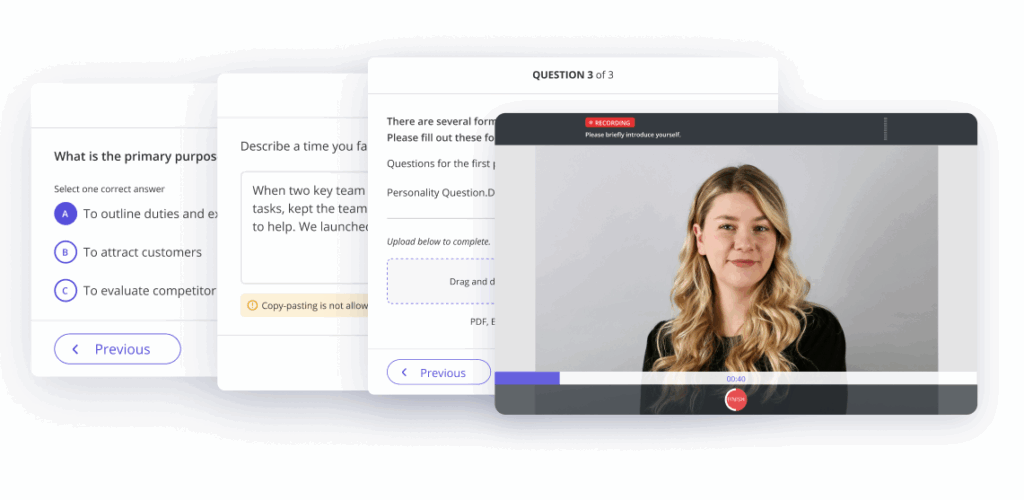
At ASTRNT, we’ve gone evidence-based through assessment-first hiring. Instead of filtering candidates by titles, schools, or pedigree, we start by measuring what really matters: performance on real tasks, structured simulations, and problem-solving assessments.
This approach is fairer, because it reduces bias and lets people with unconventional backgrounds shine, candidates who might otherwise be filtered out just because their CV doesn’t “look right.”
It’s also faster, because assessments cut through the noise of endless CV screening, giving recruiters a clear view of top performers within days, not weeks.
And it’s more predictive, since assessments that evaluate judgment, adaptability, and critical thinking correlate far more strongly with on-the-job success than keyword-stuffed résumés ever could.
Assessment-first isn’t just a philosophy, it’s a faster, fairer, and more accurate system we’ve built. And it’s already proving that the future of hiring should look beyond CVs.
How It Comes Alive inside ASTRNT
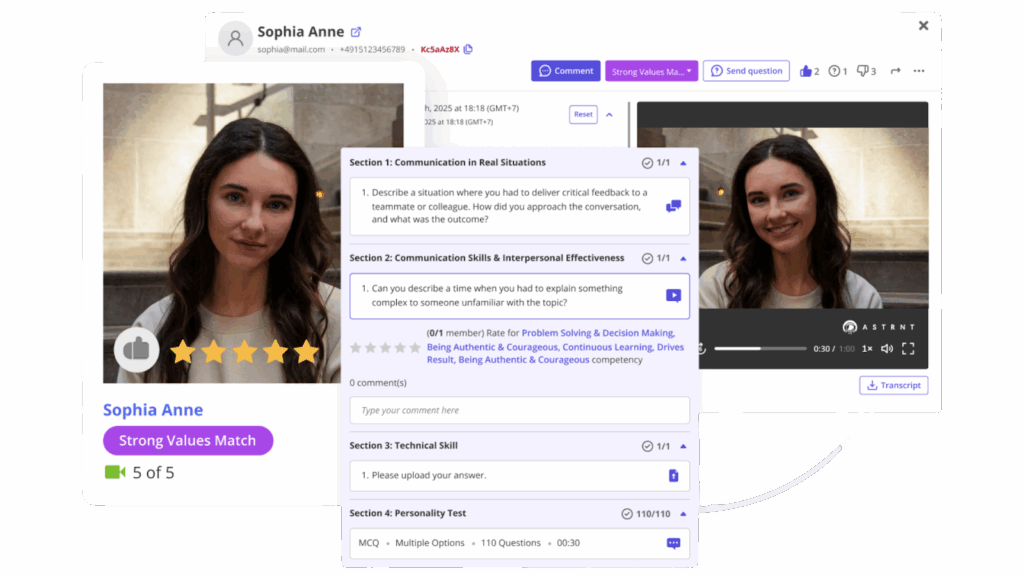
Through our platform dashboards, you don’t just get a ‘pass/fail’ signal, you see real scores on thinking, judgment, technical decision-making, soft skills, and more. Every candidate’s profile is transparent, with metrics you can directly compare. No mystery. No guessing. Just clear data that makes talent decisions faster and more confident.
Tired of polished CVs that crumble in interviews? See how ASTRNT’s assessments cut straight to real capability!
Here’s the bottom line…
AI has made CVs more polished, but not more reliable. Bias still seeps through. Real ability remains invisible behind prestige and format.

Our recent CVs Are Dangerous Talk Show (October 14) gathered leaders across APAC and the Middle East, including Citra Ovani, Susan Chen, and Telmo Martins, to discuss how organizations can move beyond résumés and fight fake resume fraud through evidence-based, AI-enabled hiring.
If you want to lead hiring that’s fair, modern, accurate, you can’t afford to keep relying on CVs as your main filter. You need something better; you need ASTRNT!